
Agentic AI, Governance, and Building the Infrastructure of Trust
Strixus Magazine · Sep 2025
Read interview
Global CTO/CPTO & Board Advisor
Non-Executive Director
The technology executive PE and VC investors deploy into high-growth and post-acquisition portfolio companies — to scale engineering organisations, modernise legacy platforms, and embed AI governance that holds up at board level.
PE · VC · M&A
Running a tech due diligence?
Stack audits, team quality & post-acquisition risk.
Scale · Exit · Readiness
How exit-ready is your tech?
10 questions. Instant score. AI commentary.
Worked with
◈ Founder & Builder
AnyForge brings everything an engineering organisation needs to deliver with AI safely under one roof. Control is the orchestration and governance layer. Crew is your AI engineering organisation — Architect, Engineer, QA, SRE — with hard role boundaries, Human-in-the-Loop approvals, and a cryptographic audit trail. Code Studio is the AI coding studio that lives in your browser, provider-independent and free to try. The velocity of AI. The compliance of a Tier-1 function.
For PE portfolios · CTOs · Engineering leaders
Profile
Edwin Poot is an end-to-end technology transformist, operating as a Global CTO/CPTO and Board Advisor. He defines his profile as equal parts executive strategist, product visionary, and unapologetic geek. Whether defining the long-term roadmap or diving into complex platform decisions, he closes the gap between what engineering builds and what the market actually needs—driving measurable gains in revenue, speed, and operational efficiency.
His track record spans an unusually broad spectrum of company stages—from small-cap ventures and mid-cap scale-ups to large-cap global enterprises. Across Yuno, Thredd, Nubank, Booking.com, and his own founded-and-exited venture Energyworx (Gartner Magic Quadrant Visionary), Edwin has repeatedly turned fragmented technology setups into high-performing, commercially focused engines.
While operating natively at the board and executive level, Edwin intentionally keeps his technical mechanics sharp. He stays close to the metal—rapidly building prototypes, defining complex target architectures, and serving as a highly credible technical soundboard for his engineering leaders. This hands-on fluency allows him to challenge assumptions deeply and provide robust guidance, while still empowering his passionate teams with the autonomy and ownership they need to scale successfully.
Whether modernising a legacy energy platform, consolidating acquired technology estates, scaling e-commerce architecture to handle hundreds of millions of transactions, or engineering atomic transaction orchestration and institutional digital asset infrastructure for regulated financial services — Edwin's consistent output is the same: leaner systems, faster delivery, and technology that holds under pressure. His cross-industry depth in harmonising and optimising platforms after M&A events, combined with hands-on experience building high-throughput, mission-critical transactional systems across energy, travel, sustainability, and fintech, makes him a particular point of leverage for PE and VC-backed portfolios navigating complexity at pace.
Areas of expertise
Investment lifecycle experience
Languages: Dutch (native) · English

Expertise
Identifying technology debt, scalability ceilings, and architecture risk before acquisition — giving investors a clear-eyed view of what they are buying.
Building the engineering culture and operational rigour that PE-backed portfolio companies need to grow fast without breaking — the adult in the room.
Implementing AI governance frameworks that make agentic workflows audit-ready, reliable, and board-reportable — then driving the multi-agent orchestration that turns that safe foundation into measurable margin expansion.
Replacing legacy architecture with cloud-native, API-first platforms that scale across markets — cutting operational drag, unlocking integration speed, and turning infrastructure into a growth asset.
Metrics
Sector depth
Fintech & Payments
Yuno · Thredd · Nubank · Paxos — payment orchestration, issuer processing, digital asset custody, and institutional settlement at scale.
Energy & Utilities
Energyworx (founder & exit) · Vattenfall · Alliander — cloud-native platforms for energy data intelligence.
Travel & E-commerce
Booking.com — architecture across one of the world's largest e-commerce platforms.
Sustainability & Impact
Dayrize — greenfield sustainability impact scoring platform built API-first for global retail integration.
Value created
Three examples of how Edwin has created measurable value — each illustrating a distinct situation, domain, and approach.

Situation
PE-backed issuer processor with an under-resourced engineering org and high infrastructure costs, tasked with scaling to match aggressive international growth targets.
Domain & Approach
Fintech · Payments — Transformative, organic growth. Rebuilt engineering culture and capability from the ground up, delivering direct EBITDA contribution through infrastructure OPEX reduction.
Outcome

Situation
Post-Series G fintech with a platform optimised for the Brazilian market, limiting the speed and economics of expansion into Mexico and Colombia.
Domain & Approach
Fintech · Multi-product — Transformative, global platformization. Drove a global acceleration initiative across all product verticals.
Outcome

Situation
Global e-commerce estate with extreme scale and high technical fragmentation, needing a unified architecture to drive commercial agility and product velocity.
Domain & Approach
Travel · E-commerce — Governance-led modernization. Harmonized redundant systems into a single federated solution.
Outcome
Engagement models
Four distinct ways to bring senior technology leadership into your organisation — from permanent hire to board-level oversight.
Full-time
Permanent executive appointment as your Head of Technology or combined Product & Technology leader. I join the leadership team, own the product vision and roadmap, build the org, define and execute the technology pillar of the Value Creation Plan (VCP), and drive value creation through to exit — bridging the gap between technical delivery and market outcomes.
Fractional
Senior CTO-level strategy and oversight at 2–4 days per week. I operate as your de facto technology leader — setting direction, managing teams, and advising the board — without the full-time commitment.
Interim
Rapid deployment into a critical leadership vacuum. Whether a sudden departure, a pre-exit sprint, or an M&A integration, I step in fast, stabilise the team, and hand over cleanly.
NED · Board
Independent board-level presence providing technology challenge, governance oversight, and strategic counsel. I give investors and chairs confidence that technology risk is understood and managed at the top.
When to call Edwin
PE and VC investors engage Edwin at every stage of the deal cycle — from first look to exit. Here is exactly where I add value, and what I deliver at each stage.
First-pass technology assessment before committing to full DD.
Full technology health report — the asset as it really is.
Fast orientation, trust built, direction set — without disrupting delivery.
Executing the VCP — engineering capability, platform modernisation, EBITDA contribution.
Technology narrative packaged for buyers — no surprises in buyer DD.
For PE & VC-backed companies
When I join a portfolio company, the clock starts immediately. Here is exactly how I operate in the first 100 days — every time.
No restructuring, no opinions on the stack — yet. I listen, map, and form a clear picture of what is real versus what is assumed. Most problems are diagnosed incorrectly on day one.
Select 2–3 high-visibility, low-risk improvements that ship in two weeks or less. This builds credibility with the team, the CEO, and the board — before the hard work begins.
Begin the harder structural work — team design, tech debt retirement plan, VCP alignment, and architecture direction. Changes are sequenced so the product never stops shipping.
By day 100, the new direction is running — not just planned. Delivery velocity is measurably improving, the board has clear data, and the first exits from technical debt are creating real EBITDA impact.
This is the same playbook Edwin applied at Thredd (PE-backed · 100→300+ engineers · −30% OPEX) and Nubank (Series G · 50% faster territory rollout across 3 markets).
Experience
A track record of building and leading technology organisations at global scale.
Joined a Series B payments scale-up — a single API connecting enterprise merchants to 1,000+ local payment methods across 190 countries — to architect the operating system for programmable global payments and lead the combined product and engineering organisation through the era of AI.
As Global CPTO, Edwin is responsible for the strategic product direction and technical evolution of Yuno's AI-native ecosystem, working at the intersection of programmable payment logic and agentic commerce. He leads a high-performance engineering culture through the transition to agentic engineering — using AI to amplify human creativity and velocity — while defining the architectural standards for the next generation of autonomous, programmable global payments and scaling agent-driven transactions beyond traditional orchestration into self-optimising, agentic ecosystems.
Joined a PE-backed issuer processor facing chronic platform reliability issues, an under-resourced engineering org, and high infrastructure costs — tasked with restoring operational resilience and defining and executing the technology pillar of the Value Creation Plan (VCP) to scale capability against aggressive international growth targets.
At Thredd, Edwin led a full-scale technology transformation at a PE-backed SaaS issuer processor — architecting a cloud-native serverless platform from the ground up with a new team. Introduced YBIYRI culture, cross-functional squads, and single-threaded leadership, moving from monthly releases to multiple deployments per day through fully automated, shift-left delivery. De-risking the asset through zero-revenue-impact client migration (Strangler Fig) — transforming the platform engine while running at full speed — while orchestrating atomic transaction processing and high-throughput ledger reconciliation across global card schemes.

Brought in as founding CPTO to build the product and technology organisation from zero, establishing architecture and team to support rapid commercial partnerships with global retailers.
At Dayrize, Edwin built the sustainability impact scoring platform from the ground up. He established an API-first, cloud-native architecture enabling rapid integration with global retail and supply-chain partners, and hired and led a cross-functional product and engineering team.

Brought in post-Series G to drive cross-border platformization as Nubank expanded from Brazil into Mexico and Colombia, while standing up its digital asset capability.
At Nubank, Edwin drove a global acceleration initiative to transform platforms built for the Brazilian market into globally reusable product foundations — reducing market-specific customisations from 75% to 25% and cutting rollout time in new territories by half. Delivered across debit, credit, accounts, investments, crypto, and lending verticals spanning Brazil, Mexico, and Colombia.
Appointed to bring architectural clarity and governance to a fragmented estate of hundreds of independent engineering teams at one of the world's largest e-commerce platforms.
At Booking.com, Edwin defined and executed global architecture strategy at one of the world's largest e-commerce platforms. He was responsible for architectural governance, platform modernization roadmaps, and engineering standards across hundreds of independent teams.

Founded on the thesis that energy data intelligence was a white-space opportunity; built from zero to a Gartner Magic Quadrant Visionary and a successful transition and exit during a Series C funding round — navigating the full Zero-to-One and One-to-Ten journey through the startup Death Valley into a venture-backed enterprise.
At Energyworx, Edwin founded and scaled the company from inception to exit. He built a cloud-native energy data intelligence platform recognised as a Gartner Magic Quadrant Visionary, leading all product, technology, and commercial strategy through multiple funding rounds and international expansion.


At Capgemini, Vattenfall, and Alliander, Edwin held foundational engineering, architecture, and consulting roles spanning enterprise technology, energy sector transformation, and large-scale systems integration.
Board & Advisory Positions
Strategic advisor to the Executive Board and CTO of the Southeast European challenger bank. Focused on architectural blueprints, AI strategy, and delivery predictability to modernise core banking infrastructure — providing technical validation for multi-year roadmaps while keeping engineering throughput aligned to business growth objectives.
Advising Debyt and Pryzma on the platform, programmable rails, and engineering practice behind a regulated payments stack — multi-currency accounts, cards, and cross-border flows, with optionality into agentic commerce.

Providing architecture advisory on institutional-grade digital asset infrastructure — atomic settlement design, crypto network integration, and programmable money rails built to the reliability and compliance standards of traditional finance.

Pioneer of mobile payments in the Nordics — creators of mCASH, the first mobile payment platform in Norway. Board oversight covering technology governance, platform scalability, and product strategy as Settle accelerates its pan-European expansion.
Founded and scaled to a Gartner Magic Quadrant Visionary exit. Ongoing shareholder representing the founding technology vision in a cloud-native energy data intelligence platform.
Publication
Reflections on Leadership, Innovation, and Building Next Generation Platforms
Social proof
Recommendations from colleagues, direct reports, and clients across Edwin's career.
Edwin is, quite simply, the most technically knowledgeable CTO I have ever had the privilege of working with. However, what truly sets him apart isn't just his mastery of technology, but how he chooses to share it. ... Rather than leading through top-down mandates, Edwin leads through empowerment. He has a unique 'sit-down' approach—instead of telling a team what to do, he joins them at the keyboard to show them how and why, transforming every challenge into a masterclass for those around him. He radically shifted our company's ways of working by advocating for true ownership and relentlessly removing the blockers that stifle innovation. He doesn't just manage people; he builds independent, high-functioning engineers by giving them the tools and the confidence to lead themselves. Any organization looking for a technical visionary who can also build a culture of autonomy and excellence would be lucky to have Edwin. I would work for him again in a heartbeat.

I had the pleasure of working with Edwin during my time at Thredd, where he served as CTO. Edwin is one of those rare leaders who combines deep technical understanding with strong strategic thinking, while remaining genuinely human and people-focused. ...
He brought clarity and structure to the organisation through a well-defined OKR and KR strategy, helping teams understand not just what needed to be delivered, but why it mattered. Edwin also played a key role in introducing cross-functional teams, creating stronger collaboration between product and engineering and enabling teams to work with ownership and alignment.
Leading a technology organisation of more than 300 people is no small task, yet Edwin managed to balance strategic direction with thoughtful leadership. He set clear expectations, supported his teams, and created an environment where people could do their best work.
It was an absolute pleasure working with Edwin, and I truly hope our paths cross again in the future.

I had the pleasure of working alongside Edwin as our Global CTO, and he stands out for his deep technical expertise and ability to lead meaningful architectural change. ...
Edwin has an exceptional grasp of complex systems and is able to cut through technical noise to focus on the changes that genuinely improve the architecture, engineering and operability foundations of a platform. His credibility with engineers comes from that depth of understanding, and he leads architectural evolution in a way that is both practical and impactful.
On a personal note, he played an important role in helping move my own career forward. Edwin consistently gave me the space and trust to take on work with real scope and responsibility, creating opportunities for me to make a tangible impact whilst growing professionally.
I would highly recommend Edwin to any organisation looking for a technology leader with genuine technical depth and the ability to drive lasting architectural improvement.

Edwin is a truly wonderful leader and a great boss. He has the ability to balance high-performance with respect and kindness and always has the back of everyone on his team. I always feel my ideas and opinions are heard and respected. He also brings energy and fun to the environment, which goes a long way to making work much better.

Edwin has been a constant source of inspiration, fostering an environment where ideas are valued, contributions are encouraged, and quality is uncompromising. His leadership is highly effective at all levels; he seamlessly navigates between the technical specifics of immediate problems and the strategic vision for the future. ...
With a vast wealth of experience, Edwin brings unique insights into situations, often identifying opportunities or risks others might overlook. Working alongside him has been a positive force for my personal and professional growth. His guidance has enabled our team to deliver features at an impressive pace while maintaining a clear, well-defined, roadmap for platform evolution.
Edwin's innovative approach to team management combines a strong focus on metrics with intelligent automation, significantly enhancing team efficiency and collaboration, without too much manual book-keeping. Naturally, he is a wizard with all of the Atlassian tools and can combine them to create powerful solutions that help the whole organisation. I have enjoyed playing a part in this process and having him as a strong North Star was highly valuable.
One standout contribution has been his introduction of tools like C4 diagram automation, which has improved cross-team alignment and streamlined our processes. Edwin has added several other tools which allow the team to make data-driven decisions, and he consistently challenges assertions with small spikes to prove theories, ensuring that the answers we find are supported by evidence. His commitment to documentation, ways of working, quality, testing, and his deep understanding of data science, DevOps, and emerging technologies like LLMs all combine into his coherent vision.
Beyond his technical and strategic talents, Edwin leads with energy and humour, fostering a positive and collaborative team culture. His ability to create an engaging environment has not only strengthened communication but also encouraged individual growth and learning within the team.
Edwin consistently makes time for meaningful discussions, providing thoughtful insights and support. It has been a privilege to work with him, and highly enjoyable. His impact on the team and my development will resonate long into the future.

Edwin is a great leader — has great visions and knows how to implement them fast and of high quality. He gets his hands dirty and is always there ready to provide support and discuss! He knows when to step in and when to give each team member the freedom to make the best decisions. He always strives for high quality work, ensuring an amazing tech stack but also balancing with the speed of execution.

Edwin served as an exceptional mentor to me. His software development expertise is unparalleled, but it's his ability to adapt and innovate that truly sets him apart. His passion for work is contagious, inspiring me to seek long-term solutions and grow as a professional. Even with his busy schedule, he took time to guide me patiently through all kinds of challenges.

Edwin is an example of how a leader can balance hard work, strategy and being fair with his direct reports. He is passionate about the work he does and learns the inherent business quickly, designing strategies that help in the short, medium and long term. He knows well how to set expectations and shield his directs from external interference so they can focus on what is really valuable.

Edwin is extremely ambitious, and his ambition is contagious. He has the uncanny ability of getting decision makers into a room to enable moving forward. He scales his influence by building relationships with a vast variety of stakeholders and makes everybody feel heard. He has shown me the way in which one can have an outsized influence as an IC.

Edwin is a true visionary for the Energy & Utility industry. He has a deep understanding of the challenges brought on by the Energy Transition and how core business processes are being affected. Through his relentless drive and love of technology, Edwin has designed and built Energyworx with a serverless architecture, run by a lean and mean team leveraging Platform-as-a-Service technologies. Edwin is the hardest worker I've ever met.

Edwin's creativity is inspiring. His far-reaching vision of how energy data will be consumed, and his deep understanding of the cloud technology resulted in the creation of a flexible and cutting-edge meter data management solution with great potential to grow as the electric grid keeps changing. Edwin has provided the critical hands-on supervision to ensure the needs of business users are met.

I've never met someone who works as hard as he does. I really admire his dedication and his passion in his work. If he takes on a project, he's dedicated for the full 100%. He took the time to teach me the skills I needed and was honest and direct.

Edwin has been a real asset to us in our work in establishing a SOA platform and way of working. Edwin manages to mix deep technology knowledge with great enthusiasm, dedication and a personality that makes him really easy to work with. I warmly recommend Edwin.

Edwin is a highly skilled Java and SOA expert, besides being a great coach, motivator and team player. I admire his perseverance, dedication and passion in his work. I can highly recommend him and would grab any opportunity to work with him again.

Edwin is an architect with excellent knowledge of IT architecture strategy and SOA solutions and has broad knowledge of current IT developments and the effect of technology upon business. This knowledge in combination with his development skills makes Edwin a good interlocutor with managers, developers, architects, business and operators. Edwin never walks away from a challenge.

Edwin is a real expert in the area of Service Orientation. As Enterprise Architect SOA he brought Nuon to a higher level. The comprehensiveness and his deep knowledge of IT, EAI and SOA is unrivaled, giving Nuon new ways of doing things. Besides, Edwin is just a very good guy — always in search for a result, but in a very nice manner.

Edwin is a true professional and expert on the SOA and integration area. With his extensive experience and his enthusiasm he is capable of bringing complex situations back to logical and easy to understand building blocks. Furthermore Edwin has the skills to communicate and bring messages across on board level as well as "work floor" level.

Edwin is a true, dedicated professional, capable of bridging the gap in what business wants and what state-of-the-art technology has to offer. Working with Edwin, you automatically get infected with his passion for IT solutions and technology in general!

Edwin is not only a great guy for a beer and a laugh, but also a great person to work with. His passion and perfectionism ensure the creation of great internet applications and solutions. He just doesn't think in problems, only solutions! You can call him inventive, a visionary, strategic, motivated or early-adopter — it's all true.

I've worked for Edwin as a customer and later as an employee — the latter because I believe Edwin has the right attitude towards information technology. A keen strategist when it comes to application of proven IT solutions and a visionary, always a step ahead of the pack when it comes to cutting edge technology.

I've known Edwin for quite a long time and I've worked with him as a colleague and as his employee. All this time our co-operation was very good and pleasant. I've always admired Edwin for his expertise, sharp analytical skills and his power of persuasion. Furthermore, Edwin is always very well-informed about new developments in his discipline and the way he sinks his teeth in new projects is impressive.

I had the pleasure of working with Edwin recently and I can confidently say that he is an exceptional professional. His extensive experience and skills in GreenTech, FinTech, and Technology in general are truly impressive. As a GreenTech recruiter, I speak to top-notch candidates within this industry on a daily basis, and I can say with conviction that Edwin represents the perfect candidate with whom anyone would want to work.

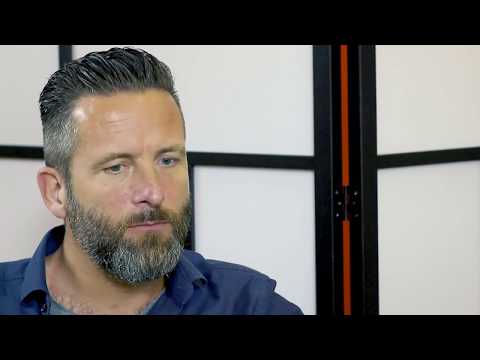
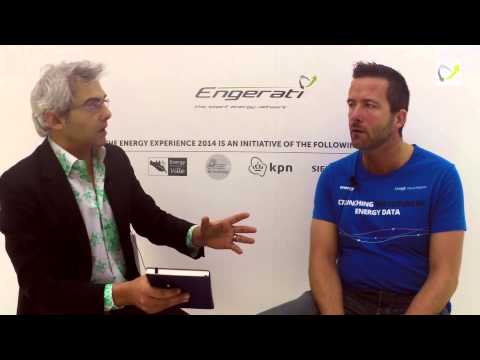
In the room & on the record
Panels, interviews, and features across fintech, AI, and energy sectors.

Strixus Magazine · Sep 2025
Read interviewFintech Magazine · 2025
Read feature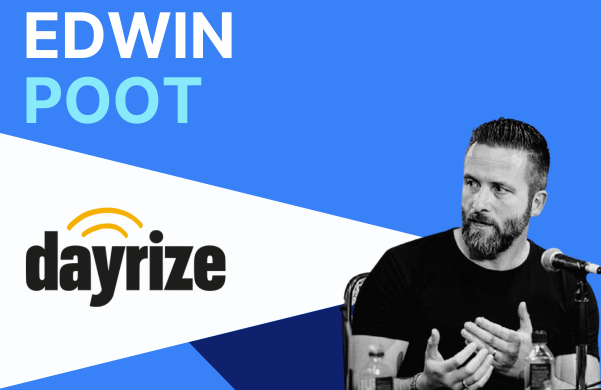
Thinking in markets
Structured thinking on where markets are broken and what it would take to fix them. These are ideas I track — some I may build, some I may not. All are grounded in patterns I have seen repeatedly across PE/VC-backed companies.
B2B cross-border payments are SWIFT-dependent, slow (T+2), and expensive (1–3% FX spread). Stablecoin rails settle in seconds at near-zero cost. The opportunity is the middleware layer that bridges card networks, core banking, and on-chain settlement — without forcing enterprises to choose one world.
The gap
Visa, Mastercard, and Stripe are moving toward stablecoin settlement, but the enterprise integration layer doesn't exist yet. Most treasury teams cannot accept USDC as a matter of policy, even when the economics are obviously superior. The gap is plumbing, not economics.
The product
A payments orchestration layer that accepts fiat, routes cross-border flows over stablecoin rails, and delivers fiat on the other side — invisible to the end counterparty. Treasury-grade compliance, FX hedging, and audit trails built in.
Why now
MiCA creates a regulated stablecoin framework in Europe. PayPal's PYUSD, Circle's USDC, and Mastercard's stablecoin partnerships signal institutional readiness. The regulatory clarity that was missing in 2021 is arriving in 2025.
My vantage point: At Thredd and Paxos I worked at both ends of this — card processing infrastructure and institutional digital asset settlement. The gap between the two systems is well understood and solvable.
Tech DD is slow, inconsistent, and expensive — £50–150k per report, 4–6 weeks of senior consultant time. The methodology should not be scarce. It should be a platform.
The gap
Every fund runs DD differently. No standardised framework, no institutional memory, no repeatability. Inconsistent risk assessment leads to exits that disappoint because the tech reality diverged from the investment thesis.
The product
An AI-native platform that generates 80% of a Tech Health Report in 48 hours: risk scores, debt estimates, architecture maturity, team capability — reviewed and validated by a senior expert.
Why now
Code analysis LLMs are now capable enough to interpret large repositories with nuance. The bottleneck has shifted from tool to framework and judgement — both of which can be productised.
My vantage point: I have run this process across PE-backed companies at different stages, sectors, and levels of maturity. The IP is the methodology, not the software.
Companies are deploying AI agents into production faster than they are building the governance layer to oversee them. This gap will produce failures — and demand for infrastructure to prevent them.
The gap
LLM agents now take consequential actions: executing transactions, sending communications, modifying records. Most organisations have no audit trail, no rollback capability, and no human-in-the-loop framework. The liability is real and growing.
The product
An observability and governance layer that sits across any agentic stack: intent logging, decision trails, rollback triggers, policy enforcement, and board-level reporting on AI-initiated actions — without requiring changes to the agent implementation.
Why now
Mastercard's verifiable intent framework and EU AI Act obligations signal that regulators are arriving. The companies that build governance infrastructure now will hold a durable advantage as enforcement tightens.
My vantage point: I wrote about this gap in "The 3 AM Rule" — agentic AI is in production at most enterprises. The governance layer is not.
Every fintech builds its own compliance stack. They all build it wrong the first time, get fined, then rebuild it. This is a solved problem being expensively re-solved at every startup.
The gap
Regulatory requirements (PSD2, DORA, GDPR, MiCA) are structural and predictable, yet most fintechs treat compliance infrastructure as a custom build. The result: delays, fines, and engineering time consumed by non-differentiating work.
The product
API-first compliance infrastructure — audit logging, consent management, transaction monitoring, regulatory reporting — delivered as a composable set of services that integrate in days, not quarters.
Why now
DORA enforcement is live. MiCA is here. The compliance surface for fintechs has expanded significantly in 24 months and shows no sign of contracting.
My vantage point: At Thredd, Nubank, and Paxos I saw the same compliance infrastructure rebuilt from scratch each time. The problem is structural, not technical.
Private credit AUM has grown from $500bn to $2.5 trillion in a decade. Most GPs still manage loan monitoring, covenant tracking, and portfolio analytics in spreadsheets and email threads. No dominant software platform exists for this asset class at scale.
The gap
Private credit funds deal in bespoke, relationship-driven instruments — revolvers, unitranches, PIK structures — that don't fit standard banking software. The result is manual workflows, slow covenant monitoring, and operational risk that grows with AUM.
The product
A purpose-built operating platform for private credit: loan lifecycle management, automated covenant monitoring, borrower reporting ingestion, portfolio-level analytics, and LP reporting — designed for the complexity of private instruments, not public markets.
Why now
Private credit is now mainstream institutional allocation. Capital has outpaced operational infrastructure. As funds scale to $50bn+, manual operations become an existential risk — and a competitive differentiator for those who solve it first.
My vantage point: PE portfolio operations and fund-level reporting are areas where I have seen operational debt accumulate fastest. The pattern is identical to early fintech — capital moving faster than the software that supports it.
As multi-agent systems proliferate, a foundational question has no infrastructure answer yet: who authorised this agent, what is it permitted to do, and how do you revoke it? Agent identity is the IAM problem of this decade.
The gap
Existing IAM systems (Okta, Azure AD) are built for human identities. AI agents need delegation chains, capability scoping, time-bounded permissions, and cross-system trust — none of which exist as productised infrastructure. MCP and similar protocols are creating demand faster than the security layer can respond.
The product
An identity and authorisation plane for AI agents: credential issuance, delegation management, capability policies, audit trails, and revocation — interoperable across agent frameworks (LangChain, AutoGen, Claude, GPT) and enterprise identity providers.
Why now
Enterprise AI agent deployments are accelerating in 2025. The security incidents will follow. The companies building the trust layer now will own the category before the first major breach makes it mandatory.
My vantage point: At Paxos I worked on cryptographic verification of institutional intent. The same problem — proving an authorised party took a specific action — is now the core unsolved problem in agentic AI.
AI data centres are creating unprecedented grid demand. Microsoft, Google, and Meta are signing 20-year PPAs. Grid stability now depends on demand response and flexible load management — and the intelligence layer that sits between hyperscalers, utilities, and energy markets barely exists.
The gap
Energy markets are real-time and volatile. AI infrastructure operators need to dynamically shift compute workloads to match grid pricing and availability — but the software that connects workload orchestration to energy trading desks does not exist in integrated form.
The product
An intelligence platform that gives hyperscalers and co-location operators real-time visibility into grid prices, renewable availability, and demand response obligations — and automates workload shifting to optimise cost and carbon simultaneously.
Why now
AI compute demand is growing 4x year-on-year. Grid infrastructure is not. Regulators in the EU and US are mandating demand flexibility participation from large consumers. The economic and regulatory pressure is converging at exactly the same moment.
My vantage point: I founded Energyworx — a cloud-native energy data intelligence platform that reached Gartner Magic Quadrant Visionary and exited via Series C. The grid intelligence problem is the same problem, 10 years later, at 100x the scale.
NIST published its first post-quantum standards in 2024. Every financial institution, payment network, and regulated enterprise needs to migrate encryption infrastructure before the quantum threat materialises. The migration tooling barely exists. Most enterprises have not started.
The gap
Cryptographic debt is invisible until it isn't. RSA and ECC — the algorithms underpinning TLS, code signing, and digital payments — are vulnerable to sufficiently powerful quantum computers. Discovery, inventory, and migration tooling for cryptographic assets is almost entirely absent from the enterprise stack.
The product
A cryptographic asset discovery and migration platform: automated inventory of where RSA/ECC is used across code, infrastructure, and APIs; risk scoring; migration sequencing; and PQC library integration — with audit trail for board and regulatory reporting.
Why now
NIST ML-KEM (Kyber) and ML-DSA (Dilithium) are now published standards. The US government has mandated PQC migration for federal agencies by 2030. Financial regulators will follow. The enterprise window to migrate on their own timeline — before it becomes a compliance emergency — is 2025–2028.
My vantage point: High-throughput transactional systems with cryptographic integrity requirements — card processing, atomic settlement, digital assets — are exactly the systems most exposed to this risk and least prepared to migrate.
GPs managing 20+ portfolio companies have no unified view of operational health, hiring velocity, technology risk, or burn rate across their book. Every portfolio review is assembled manually from 20 different reporting formats. This is a solvable data problem.
The gap
Point solutions exist for financial reporting (Allvue) and investor relations (Visible), but no platform gives a GP a real-time operational intelligence layer across the portfolio — hiring signals, engineering velocity, product delivery cadence, technical health, and key person risk in one place.
The product
A portfolio intelligence platform that ingests signals from HR systems, code repositories, financial systems, and management reporting — and surfaces anomalies, risks, and cross-portfolio benchmarks to the GP before the quarterly board pack arrives.
Why now
Average PE fund size has increased while average portfolio company hold periods have shortened. GPs are being asked to create value faster with less time. Operational intelligence is the only way to scale the GP's ability to intervene at the right moment.
My vantage point: I have been on both sides of this — as a portfolio company executive receiving GP scrutiny, and as an advisor helping GPs understand the technology risk in their portfolio. The information asymmetry is stark and structural.
DORA is live. MiCA is live. Basel IV lands in 2025. EU AI Act obligations are active. Each regulation demands structured, auditable, machine-readable reporting. Most compliance functions are still generating PDFs manually. The infrastructure layer between regulation and reporting doesn't exist at the pace regulators are moving.
The gap
Regulatory reporting is treated as a periodic, manual exercise — extract data, format a report, submit to regulator. As regulators move toward continuous monitoring and machine-readable submissions, this model breaks. The data pipelines, schema management, and submission infrastructure for real-time compliance don't exist in productised form.
The product
A regulatory data infrastructure platform: schema-aware data pipelines, automated mapping to regulatory taxonomies (XBRL, LEI, DORA ICT registers), submission orchestration, and an audit trail that is itself regulator-ready — updated as regulation evolves, without re-engineering the underlying data model.
Why now
The EU regulatory calendar for financial services is the most active it has been in 20 years. Every major framework published in the last 36 months has a machine-readable reporting requirement. The wave has already started — the infrastructure to meet it has not.
My vantage point: Compliance reporting infrastructure was a recurring pain point at every regulated entity I have led technology at — Thredd, Nubank, Paxos. The pattern is identical each time: the regulation arrives, the engineering team builds a one-off solution, and the debt compounds.
Get in touch
Available for full-time, fractional, and interim CTO/CPTO roles — as well as Non-Executive Director, Board Advisory, and technology due diligence engagements for PE and VC portfolios.
Common questions
Edwin is available for full-time CTO/CPTO appointments, fractional CTO/CPTO engagements (typically 2–4 days per week), interim CTO/CPTO roles during leadership transitions or M&A events, and Non-Executive Director or Board Advisory positions — particularly for PE- and VC-backed portfolio companies.
A fractional CTO works part-time (2–4 days per week) on an ongoing basis — suited to companies that need strategic technology leadership without the cost or commitment of a full-time hire. An interim CTO steps in full-time for a defined period (typically 3–9 months) to cover a sudden vacancy, lead through a critical transition, or stabilise a platform in crisis. Edwin is available for both.
Yes — this is a core focus. Edwin works closely with PE and VC investors on technology due diligence before acquisition, 100-day plans post-close, Value Creation Plan (VCP) execution, and exit readiness. His track record includes multiple PE-backed transformations across fintech, energy, and digital infrastructure.
Edwin's deepest expertise is in fintech and payments (card processing, issuer-processing, digital banking, institutional digital assets), smart energy and utilities, and digital infrastructure. He has also led technology at scale in travel and e-commerce (Booking.com) and sustainability (Dayrize). He works with PE/VC investors across sectors where platform modernisation, agentic AI, and engineering scale are on the agenda.
The fastest way is to book a 30-minute intro call or send an email to edwin@pootonline.com. You can also connect on LinkedIn. Edwin is available internationally and typically responds within one business day.
Edwin splits his time between Spain, the Netherlands, and the United Kingdom, and is available for international engagements. He regularly works on-site with teams and boards across Europe and globally.